










Pasadena will remove 17 non-native trees from the Lower Arroyo Seco for fire safety and habitat restoration, effectively reversing a 2020 decision to preserve the same trees.
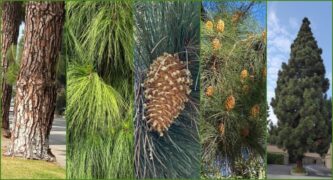
The Urban Forestry Advisory Committee voted in May 2025 to support removing 11 Canary Island Pines and six Red Gum Eucalyptus trees near the Van de Kamp Bridge—trees the committee had voted to preserve nearly five years earlier during a habitat restoration project. The reversal came after residents adjacent to the Arroyo renewed their fire safety concerns following the January Eaton Fire, which destroyed more than 9,400 structures, with Altadena sustaining the majority of damage.
The eucalyptus and pines shed flammable bark and needles that create “ladder fuels” carrying fire from ground to canopy, according to a May 2025 staff report to the committee.
The trees were originally identified for removal as part of the Lower Arroyo Seco Habitat Restoration Project in 2020. Both species are non-native and possess allelopathic properties that can inhibit nearby native plant growth, according to city documents. At a September 2020 special meeting, UFAC voted to support removing other non-native plants but not these specific pines and eucalyptus after community members raised concerns about the trees’ environmental benefits.
The City Council directed staff at that time to remove the trees once native sycamores planted as part of the restoration flourished in the area.
Following the January windstorm and Eaton Fire, residents living near the Arroyo requested that staff revisit the removal proposal, according to the May 2025 staff report. The majority of public comments at the May 14 UFAC meeting supported removal. Several residents expressed concern about the proposed removal at the City Council’s November 24, 2025 meeting, though specific objections were not detailed in available public records.
Red Gum Eucalyptus naturally sheds bark, and its resinous material combined with dry leaf litter can increase fire risk, according to the staff report. The accumulation of debris at the tree’s base creates ladder fuels that spread fires from ground level to the upper canopy.
Canary Island Pines shed needles annually, and the accumulated leaf litter decomposes slowly and can be prone to flammability, the report states. While the trees themselves can be fire-resistant, removal of the leaf litter and woody debris requires routine maintenance by the City.
Various municipal agencies in California recommend against or prohibit new plantings of pines and eucalyptus in fire hazard zones, according to the staff report, which cited fuel modification guidelines from Beverly Hills and Santa Barbara. However, no state or city policies direct the removal of existing live pines and eucalyptus.
The trees were found to be in fair or better condition during a city inspection. Under Pasadena Municipal Code Chapter 8.52.076, removal requests for healthy public trees must be considered based on provisions of the Tree Protection Ordinance and Public Tree Removal Criteria.
Section 3.2.2 of the Lower Arroyo Master Plan, adopted by the City Council between 2003 and 2005, calls for continual monitoring of plant and habitat health, with specific recommendations to restore and maintain native plants and mitigate fire hazards and erosion in critical areas.
The new native plants installed as part of the habitat restoration project are currently being monitored for health and establishment. Removing the pines and eucalyptus will provide opportunity for additional native tree plantings and help improve natural plant propagation by eliminating the allelopathic leaf litter, according to city documents.
The Arroyo Seco supports a diverse ecosystem and is closely abutted by urban residences, requiring balance between environmental preservation and public safety, the staff report states.
All trees will be inspected for nesting birds before removal, and work will be postponed until no nesting birds will be harmed by the process. The city will replace the trees at a 1:1 ratio with 24-inch box native species. The new trees will be planted within the habitat restoration area to utilize the existing irrigation system installed as part of the project.
The removal is covered by the City Council’s original environmental findings for the Lower Arroyo Seco Habitat Restoration Project approved in 2020. The council found the project exempt from the California Environmental Quality Act under Categorical Exemptions 4 (Minor Alterations to Land) and 33 (Small Habitat Restoration Projects).
The habitat restoration project was funded with $798,803 from Proposition A (Parks) funds and Residential Impact Fees, with construction completed in 2021.
 Get our daily Pasadena newspaper in your email box. Free.
Get all the latest Pasadena news, more than 10 fresh stories daily, 7 days a week at 7 a.m.