




The Community Police Oversight Commission is scheduled to hear a presentation Aug. 13 from the Independent Police Auditor on a review of Pasadena Police Department calls for service involving a behavioral health component, a report concluding that patrol officers already hold many of the skills used by the department’s specialized crisis team and that differences in how encounters end trace mainly to how calls are framed, paced and resourced.
The review was prepared by OIR Group at the direction of the commission’s Ad Hoc Committee on Mental Health, which requested the analysis after convening a roundtable with eight local mental health and social service organizations.
The findings carry direct consequences for Pasadena residents and families who call police during a mental health emergency, and for businesses and neighbors who report someone in distress. The report examines who responds, how long the wait is and what shapes whether an encounter ends in care, arrest or force.
Auditors reviewed 14 cases: 12 calls for service drawn at random from a broader list of behavioral health-related calls, plus two cases carried over from the auditor’s earlier use of force and vehicle pursuit reviews.
Of the 14, eight resulted in an involuntary mental health detention under state law, commonly called a 5150 hold, and six did not result in a completed hold, including one case in which a hold was offered.
Auditors caution that the sample is small and illustrative rather than a basis for department-wide conclusions.
The report describes a hybrid response model. The Homeless Outreach Psychiatric Evaluation Team, established in 2002, pairs a sworn Pasadena Police Department officer with a licensed clinician from the Los Angeles County Department of Mental Health.
The department staffs three such teams, and the county assigns the clinicians at no cost to the city.
Expanding that coverage is constrained by clinician availability: as county resources, the clinicians’ work hours are not set by the department, which the report says makes evening and nighttime staffing difficult.
When the team is unavailable, most commonly during evenings, nighttime hours and Sundays, patrol officers handle behavioral health calls, usually without clinical consultation.
Across the cases, auditors found officers in both models demonstrated a sound grasp of the legal standard for involuntary detention and engaged families with care.
Where responses diverged, the report attributes the difference to posture rather than competence: encounters framed early as enforcement problems compressed time and narrowed de-escalation options, while encounters treated as crisis stabilization managed comparable or greater risk with less escalation.
Two patrol cases in the sample illustrate the pattern. In one, officers responded to a family call involving a man with schizophrenia who had assaulted his brother and was off his medication. After the brother signed a private person’s arrest form, the encounter moved quickly toward enforcement, and a lead officer anticipated a Taser deployment before any meaningful engagement with the man had occurred.
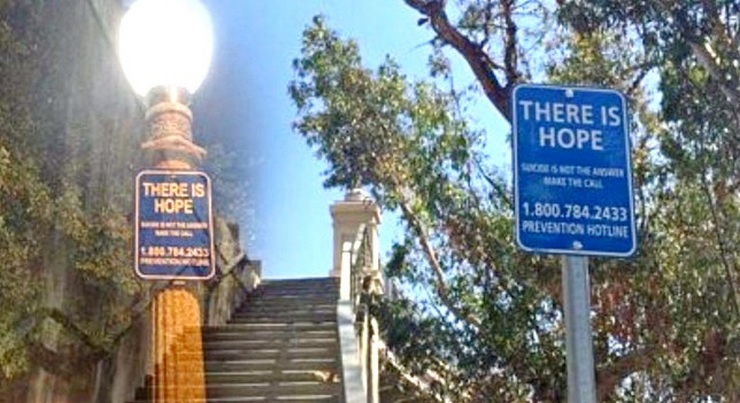
In the other, an officer who found a man on the outside of a bridge barrier spent roughly 20 minutes in conversation with him, kept officers behind their patrol vehicles at his request and treated his statements about being armed as expressions of crisis rather than triggers for enforcement. The man climbed back over, minimal force was used and he was taken to a hospital. The report notes the bridge encounter carried arguably greater threat cues yet did not escalate to force.
Across the cases reviewed, the report states, the actions officers took were within policy and reflected legitimate safety concerns, and the distinctions it draws are about mindset and posture rather than competence or intent.
Response-time data drawn from Computer-Aided Dispatch records showed an average of eight minutes and 26 seconds from call receipt to dispatch, three minutes and 54 seconds from dispatch to arrival, and one hour and 57 minutes on scene.
Calls ending in a 5150 hold averaged more than three and a half hours from dispatch to clearance, against roughly 30 minutes for calls that did not, a personnel commitment the report describes as more than seven times greater. Service providers separately reported that people in crisis may wait 45 to 60 minutes when a call is not classified as an emergency.
The report closes with 11 recommendations, including scenario-based reinforcement of crisis response expectations, assigning officers with behavioral health experience to evening and nighttime shifts, collaboration with local service providers, colleges and city and county partners, continued exploration of weekend and nighttime crisis team coverage, tracking of response times by phase and outcome, evaluation of real-time translation services used by dispatch, and clearer guidance on handcuffing, on the advisement given during a 5150 hold and on body-worn camera continuity during transport and hospital handoffs.
Public comment on any item is limited to three minutes and requires a speaker card submitted before comment on that item begins, and the agenda notes items may not be called in the order listed.
The Community Police Oversight Commission is scheduled to meet at 6 p.m. on Thursday, Aug. 13, in Council Chambers, Pasadena City Hall, 100 North Garfield Avenue, Room S249, in Pasadena. For more information call (626) 744-4124 or visit https://www.cityofpasadena.net/commissions/agendas/.
 Get our daily Pasadena newspaper in your email box. Free.
Get all the latest Pasadena news, more than 10 fresh stories daily, 7 days a week at 7 a.m.


