





Pasadena recorded its first positive mosquito sample of the year on Aug. 13, Altadena has logged three positive samples since July 23, and South Pasadena four since Aug. 4, according to the District’s detection table, last updated Aug. 31. The District’s release follows advisories issued Aug. 20 by the Pasadena Public Health Department, the Los Angeles County Department of Public Health and the California Department of Public Health. The state health department said statewide activity had reached its highest level in five years.
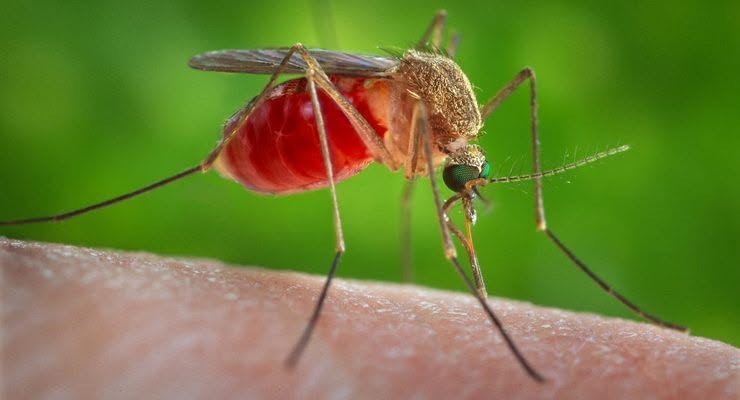
West Nile virus is spread through the bite of an infected Culex mosquito, which is most active at dusk and dawn, the District said. The positive samples were detected across cities and unincorporated areas within the District’s service area, and the elevated activity signals a need for residents to take extra precautions while outdoors during peak mosquito activity hours, the District said. The virus is endemic to the region, and while disease activity fluctuates year-to-year, local and state agencies are also observing higher-than-average activity, according to the District.
“Although current WNV activity is higher than usual, our teams are purposely [sic] equipped to deal with this challenge,” said Director of Scientific Programs Tristan Hallum. “We strongly encourage residents to tip out any stagnant water around their homes, toss out any unused containers that can collect water, and protect themselves with mosquito repellent when outdoors during this holiday weekend.”
Vector control technicians are actively monitoring and controlling known sources and canvassing for additional sources in communities with elevated mosquito activity, and District staff are conducting enhanced surveillance and increasing awareness and education around mosquito prevention and protection, the District said.
West Covina, with 12 positive samples, and Covina, with 11, have the highest counts on the District’s list, followed by Rosemead with nine and Monterey Park and Temple City with seven each. The earliest detection date on the list is June 23 in Alhambra; the District announced on June 29 that seasonal West Nile activity had returned with a positive sample collected in Alhambra. Sierra Madre does not appear on the list of communities with positive samples. The District has also recorded five West Nile-positive dead birds this year. A sample is a random collection of 10 to 50 mosquitoes from a trap, according to the District.
The District is one of five vector control districts in Los Angeles County. Year-round, the agency monitors stagnant water sources such as gutters, storm drains, channels and nonfunctional swimming pools, routinely monitors populations of adult mosquitoes using traps and tests groups of adult female mosquitoes for the presence of West Nile virus and other mosquito-borne diseases, and submits samples from dead birds, such as crows, for testing, which can provide insight into the spread of West Nile virus, according to the District.
The District reports data related to mosquitoes; human cases are reported by the Los Angeles County Department of Public Health and the Pasadena Public Health Department. In its Aug. 20 advisory, the Pasadena department said the District had confirmed the first detection of the virus in Pasadena this year in a mosquito trap site collected Aug. 13.
“Most people infected with West Nile virus do not develop symptoms, but a small percentage can develop serious, potentially life-threatening illness,” Parveen Kaur, Pasadena’s health officer, said in the advisory. “As we enter peak transmission season, I urge everyone to take simple steps to prevent mosquito bites and eliminate standing water around their homes.”
The County health department on Aug. 20 confirmed the first local West Nile death of the 2026 season, a San Fernando Valley resident who was hospitalized and died from neurological illness caused by severe West Nile virus. Fifteen infections had been documented in the County as of Aug. 20, excluding Long Beach and Pasadena, whose cases are reported by their local health departments, and the department said the number is higher than the five-year average for the same period. Local vector control districts are reporting a higher-than-expected number of positive mosquito pools and dead birds from Los Angeles County, the County department said.
“After experiencing the warmest winter on record, West Nile virus amplification and consequently detection in Los Angeles County started almost two months early this year, leading to widespread activity countywide,” Susanne Kluh, general manager of the Greater Los Angeles County Vector Control District, said in the County’s release.
Statewide, the California Department of Public Health had reported 65 human cases from 16 counties and 3,001 positive mosquito samples from 29 counties as of Aug. 28. Eight of every 1,000 mosquitoes were testing positive for the virus, compared with a five-year average of five per 1,000, the state health department said Aug. 20. “August and September are peak periods of West Nile virus transmission in the state, so we urge everyone to take precautions to protect themselves against mosquito bites,” said Erica Pan, the department’s director and state health officer.
There is no human vaccine or cure for West Nile virus, and residents must be proactive at preventing mosquito-transmitted diseases through prevention and protection, the District said. The District’s release, citing the Los Angeles County Department of Public Health, said one in five individuals infected with the virus, for which there is no cure, will exhibit symptoms that include fever, headache, body aches, nausea or skin rash, and that the symptoms can last for several days to months. One in 150 people infected with the virus will require hospitalization, and severe symptoms include high fever, muscle weakness, neck stiffness, coma, paralysis and possibly death, it said. Those at greatest risk include seniors and individuals with compromised immune systems, and people over 50 years of age and those with chronic health problems are at higher risk of severe illness. While not all mosquitoes carry the virus, the type of mosquito that spreads it is found throughout Los Angeles County, the release said. In its own Aug. 20 release, the County department said symptoms usually appear three to 14 days after infection and that serious illness can include meningitis, encephalitis and limb paralysis.
To reduce mosquito activity and stay healthy and bite free, the District recommends that residents:
• Eliminate standing water in clogged rain gutters, rain barrels, discarded tires, buckets, watering troughs, or anything that holds water for more than a week.
• Ensure that swimming pools, spas, and ponds are properly maintained.
• Change the water in pet dishes, birdbaths, and other small containers weekly.
• Report neglected swimming pools in your neighborhood to your vector control district.
To prevent mosquito bites, the District recommends that residents:
• Apply mosquito repellent to exposed skin before going outdoors and reapply as recommended on the label.
• Wear insect repellent containing active ingredients approved by the Centers for Disease Control and Prevention and the Environmental Protection Agency: DEET, picaridin, IR3535, or oil of lemon eucalyptus.
• Wear light-colored, long-sleeved shirts and long pants.
For more information about West Nile virus activity in the San Gabriel Valley, residents can contact the District at 626-814-9466, online at SGVmosquito.org, or on social media, @SGVmosquito.
The District’s city-by-city detection list is posted on its website, and the District also points readers to VectorSurv Maps for what it calls a comprehensive look at this year’s West Nile virus activity throughout Los Angeles County and California. Dead birds can be reported at westnile.ca.gov or by calling 1-877-WNV-BIRD (968-2473).
 Get our daily Pasadena newspaper in your email box. Free.
Get all the latest Pasadena news, more than 10 fresh stories daily, 7 days a week at 7 a.m.