




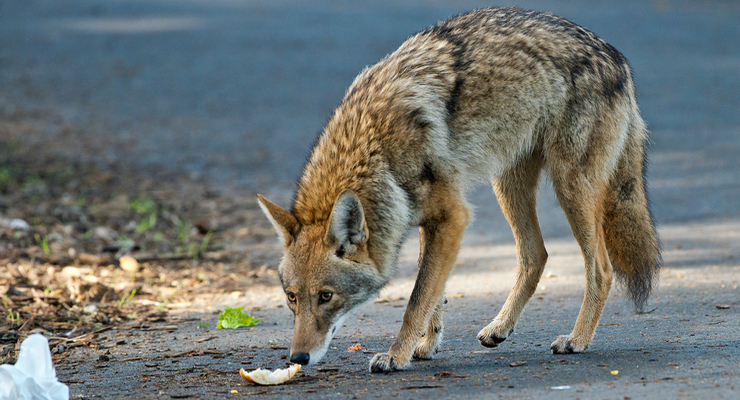
The session comes three years after the City Council voted unanimously for nonlethal approaches to coyotes and directed the department to bring in a panel of coyote experts. The expert panel, first planned for spring 2025 and delayed by the Eaton Fire response, was set for October, according to a department memorandum prepared for the council’s Public Safety Committee in July.
“I think hiring a consultant to help guide us and include experts would be the way to go,” Mayor Victor Gordo said at the July 2023 meeting.
The discussion runs from 9 to 11:30 a.m. and will cover urban coyote behavior, applicable state laws, reducing attractants and conflict prevention tips, according to the department’s flyer. The flyer also lists a resource fair and complimentary coffee. Residents can RSVP online, and walk-ins are welcome. The city encourages attendees to bring a blanket or chair.
District 3 Councilmember Justin L. Jones, a member of the Public Safety Committee, listed the upcoming discussion in his Sept. 25 newsletter to residents.
The city manages coyotes under an Urban Wildlife Management Plan that pairs public education with enforcement of laws against feeding wildlife and a tiered classification of coyote encounters to identify and respond to threats. Coyotes are regulated under the California Fish and Game Code, which the California Department of Fish and Wildlife enforces. Deliberately feeding coyotes is prohibited by state regulation, and the city’s municipal code bars feeding coyotes, raccoons, foxes and other non-domesticated mammalian predators.
Coyote reports to the city climbed from 322 in 2023 to 480 in 2024 and 545 in 2025, according to a July memorandum from Public Health Director Manuel Carmona.
Of 1,456 concerns logged since January 2023, staff classified 48 percent as normal coyote behavior, 38 percent as mildly habituated and 13 percent as aggressive habituated. Pasadena Humane investigated four community reports of coyote attacks on people between January 2023 and June 2026 and found no evidence of an attack in any of them, the memo said.
Since the council’s direction, the department has held sidewalk talks in the Madison Heights and San Pasqual neighborhoods, posted signs warning that feeding wildlife is illegal and citable, and launched a “Be Coyote Safe” social media campaign. It also lent residents deterrent devices; motion-activated sprinklers proved popular, while handheld sonic deterrents drew less interest. Humane Wildlife Control was hired to study coyote behavior in four neighborhoods through canvassing and fixed cameras. Carmona wrote that feeding, intentional or not, and access to trash remain the main attractants behind most conflicts.
Adolescent coyotes leave their dens in late summer or early fall in search of territory, which can increase coyote activity in neighborhoods, the department said in 2024. “Coyotes are naturally fearful of people and typically go out of their way to avoid human interaction,” Carmona said then. “When coyotes are comfortable around humans, it is a strong sign that someone nearby is intentionally or inadvertently feeding them.”
Residents can report coyote sightings to the City Service Center at (626) 744-7311, and Pasadena Humane responds to attacks and aggressive habituated coyotes at (626) 792-7151. A coyote biting or attempting to bite a person should be reported to 911, according to the city.
NEED TO KNOW
Event: Living with Coyotes: A Community Discussion on Reducing Conflicts with Our Wildlife Neighbors, hosted by the Pasadena Public Health Department. When: Saturday, Oct. 24. Time: 9 to 11:30 a.m. Where: Memorial Park, 85 E. Holly St., Pasadena; the city‘s event listing gives the venue as the Memorial Park Hub, 145 N. Raymond Ave. RSVP: https://bit.ly/CoyotePanel; walk-ins welcome. Accessibility: Requests to (626) 744-7311 or CSC@CityOfPasadena.net, with at least 72 hours’ notice. For more, call (626) 744-6004 or visit https://www.cityofpasadena.
 Get our daily Pasadena newspaper in your email box. Free.
Get all the latest Pasadena news, more than 10 fresh stories daily, 7 days a week at 7 a.m.