






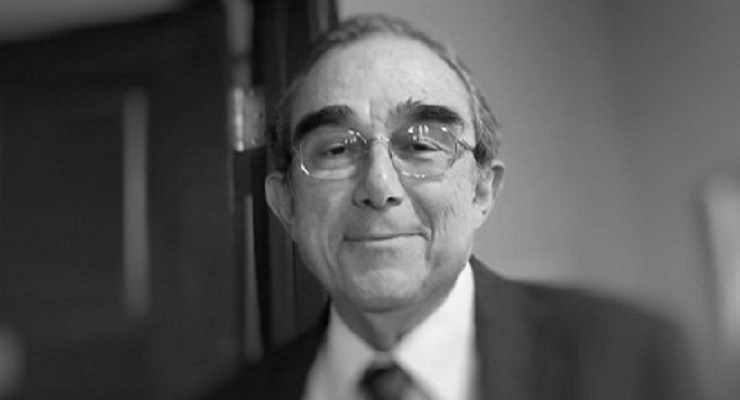
Hours before Monday’s City Council meeting, former Pasadena Mayor Bill Paparian said in correspondence to the City Council that scent-tracking dogs are not reliable. The City Council is set to approve the donation of a tracking dog to the Pasadena Police Department as part of Monday’s consent calendar.
“Several documented cases highlight how canine scent evidence (including bloodhound tracking and dog scent lineups) has contributed to wrongful convictions, often later overturned by DNA testing or other exculpatory evidence,” Paparian wrote.
According to Paparian, several organizations including the Innocence Project have criticized dog scent evidence as unvalidated forensic science, citing “handler bias, contamination risks, and lack of scientific rigor.”
According to a City staff report, acquiring the dog would strengthen the department’s ability to locate missing people and suspects.
The dog would be donated by the Pasadena Police Foundation and is valued at $25,000.
The addition of the canine would fill a gap in the department’s K-9 capabilities.
Pasadena’s canine unit currently has four dual-purpose patrol dogs trained in narcotics or explosives detection and one single-purpose explosive detection dog, none are trained specifically for tracking or trailing.
As a result, police now rely on outside agencies or vendors — including contracted bloodhound services — to handle tracking cases, often with response times exceeding 90 minutes and inconsistent availability.
Paparian points to a series of cases from Florida and Texas in which scent tracking and scent lineups were used to connect suspects to crimes later shown to be wrongful or unreliable.
In 1982 Wilton Dedge was convicted in Florida of sexual battery and sentenced to 22 years in prison after a handler testified that a dog linked him to the crime scene. Dedge was exonerated in 2004 after DNA testing proved his innocence.
The same handler, John Preston, also provided scent evidence in the 1981 murder case of William Dillon, who spent 27 years in prison before being exonerated by DNA testing in 2008.
That case is listed in the National Registry of Exonerations.
However, the issue in those cases was not just with the dog but with Preston and preconceived notions.
According to media reports, Preston was exposed as a fraud after he testified that his scent-discriminating dog found a girl’s scent in a suspect’s car. Preston also claimed the dog tracked Roscoe’s scent to the girl’s clothes and her bicycle.
The suspect maintained his innocence, and the Arizona Supreme Court, which initially upheld Roscoe’s conviction, sent the case back to the trial court in 1989 after lawyers challenged Preston’s credibility.
A judge later ruled that Preston misrepresented the training and qualifications of his dog and cued it to obtain results sought by Maricopa County sheriff’s deputies.
Paparian also cited the case of Juan Ramos, whose 1983 conviction for murder and sexual battery was overturned the following year by the Florida Supreme Court, which ruled the scent evidence unreliable. Ramos was later retried and acquitted.
Texas cases were also referenced, including those involving Deputy Keith Pikett, whose bloodhounds were used in several scent lineup investigations during the 2000s.
The Innocence Project of Texas later criticized those cases, saying the methods lacked proper scientific controls.
The correspondence also pointed to a Southern California case. In 2003, Josh Connole, a Caltech graduate student living in Pomona, was arrested and jailed for four days on suspicion of a series of arsons and vandalism attacks targeting more than 100 SUVs at dealerships across the San Gabriel Valley.
Authorities said a bloodhound followed a scent trail from crime-scene materials to Connole’s home.
Prosecutors later concluded there was insufficient evidence to file charges, and Connole was released. The attacks were later attributed to members of the Earth Liberation Front.
Connole later sued for civil rights violations. The city of West Covina settled the case in 2004 and issued a public apology. The FBI reached a separate settlement in 2005 and issued a letter of regret.
Paparian wrote that “dog scent evidence, especially lineups, where dogs pick from scented items, has contributed to at least three wrongful convictions overturned by DNA,” and warned that studies show dogs “can be influenced by subtle human cues, leading to error rates far higher than claimed.”
“These cases underscore why many experts advocate treating canine scent evidence as corroborative at best — not standalone proof,” Paparian wrote, adding that while dogs can be useful for generating leads, “overreliance has proven risky in court.”
 Get our daily Pasadena newspaper in your email box. Free.
Get all the latest Pasadena news, more than 10 fresh stories daily, 7 days a week at 7 a.m.