




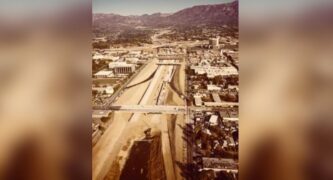

The City’s Environmental Advisory Commission is calling on officials to strengthen environmental and sustainability requirements in the proposed Reconnecting Communities 710 Vision Plan, urging the City Council to adopt enforceable standards that prioritize climate resilience, public health and long-term accountability.
In a memorandum to the mayor and council, the commission praised the draft plan while highlighting that stronger implementation measures are needed to ensure its success.
“The Vision Plan reflects strong planning principles, with a clear focus on sustainability, climate resilience, public health, and restorative justice,” the commission wrote, describing it as a thoughtful, forward-looking framework aligned with Pasadena’s Climate Action Plan and a potential model for a 21st-century sustainable community.
The commission highlighted the long-vacant corridor created by a halted freeway expansion as a rare opportunity to develop a model sustainable community, incorporating district-scale water and energy systems and climate-responsive design.
The commission urged the city to make water a defining feature of the development.
“Water-centered design can distinguish the 710 area as a climate-adaptive district [rather than a conventional mixed-use development] while strengthening long-term water resilience,” the group wrote.
In its letter, the commission called for expanded stormwater capture, groundwater recharge and greywater reuse systems integrated into parks, boulevards and open space.
Commissioners also encouraged incorporating visible “living laboratory” elements to educate the public about climate-resilient infrastructure.
The group also recommended establishing an innovation incubator and workforce development programs to connect local residents with emerging industries tied to sustainability, including clean energy, water systems and green infrastructure. The effort could leverage partnerships with nearby institutions such as Caltech, NASA’s Jet Propulsion Laboratory and Pasadena’s growing biotech sector.
A major focus of the memo is the call to treat green infrastructure as essential public infrastructure, rather than an optional amenity. The commission recommended setting measurable urban tree canopy targets, expanding shaded pedestrian and bicycle networks and requiring heat-mitigation strategies such as reflective surfaces and permeable materials to reduce rising temperatures.
The commission also urged the city to commit to a net-zero energy goal for the corridor, including eliminating new natural gas infrastructure, investing in district-scale battery storage and microgrids, and exploring geothermal or other site-specific energy systems.
To address public health concerns, the memo recommends stronger air quality and noise reduction measures, including high-performance building standards, vegetation buffers and indoor air quality protections. It also calls for expanded recycling, composting and waste management infrastructure, along with data-driven monitoring of environmental and health outcomes over time.
Perhaps most significantly, the commission stressed the need for accountability, warning that sustainability goals risk being diluted without enforceable standards. It urged the city to codify requirements into zoning rules, development agreements and design guidelines, establish clear timelines and milestones, and require annual public reporting on progress.
“The Vision Plan functions as a binding framework, not a conceptual guide,” the commission wrote, calling for measurable benchmarks tied to project approvals and long-term performance.
The commission concluded that, if implemented effectively, the project could position the City as a national leader in climate-forward redevelopment, transforming the 710 corridor into a model of environmental resilience and economic vitality.
 Get our daily Pasadena newspaper in your email box. Free.
Get all the latest Pasadena news, more than 10 fresh stories daily, 7 days a week at 7 a.m.


