








[HDR Engineering via City of Pasadena]
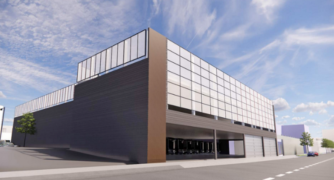
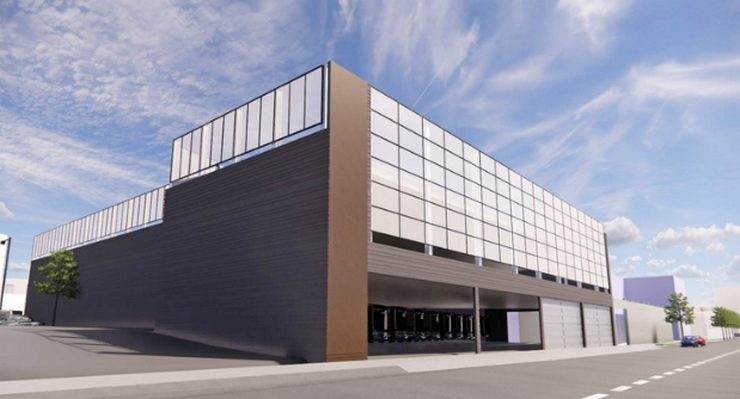
The Pasadena Design Commission conducted a preliminary consultation Tuesday on plans for a new transit operations complex spanning two parcels at 2180 E. Foothill Blvd. and 2211 E. Walnut St. The project would replace existing 1960s commercial buildings with a 26,000-square-foot maintenance facility and a 126,080-square-foot parking structure to accommodate the city’s expanding transit fleet.
“In both cases, in both streets, it’s going to change the nature of the street as you’ve described, these open bays and buses and so forth,” said Commission Vice Chair Robert Carpenter, noting that while “Walnut and Foothill have always been in Pasadena, car friendly shops, mom and pop shops, that kind of thing,” the scale of change warranted careful consideration.
The development includes a through-lot parcel totaling 34,100 square feet and an adjacent 22,945-square-foot lot. Plans call for ground-floor service areas with five repair bays, two inspection bays, and one wash bay, while the second floor will house dispatch operations, offices and employee spaces. The facility will maintain a 30-foot setback from Walnut Street to accommodate bus access.
Operations will begin with 41 fleet vehicles and expand to 70 vehicles over 20 years, with service starting daily at 4:30 a.m. The complex will include charging infrastructure for 15 electric buses, along with accommodations for hydrogen fuel cell and natural gas vehicles. The parking structure will provide 153 spaces for employees and visitors.
The project sparked debate over the parking structure’s design review exemption.
Commissioner Philip C. Chiao described the parking garage as “three story, four story” and “huge.” It would have “a major impact on urban design and the appearance of the neighborhood,” Chiao said.
Staff Planner Stephanie Cisneros outlined key recommendations, including studying alternatives to the proposed solid screening wall along Walnut Street, incorporating more windows, and creating a distinguished pedestrian entrance.
“From an urban design point of view, I think we very much like to see this as one building and they’re integrated more specifically on the operation,” Commissioner Chiao added.
The project team, led by HDR Engineering, Inc. and Stantec, acknowledged the preliminary nature of the design.
A similar project was reviewed in 2017 but withdrawn to expand its scope.
The current proposal requires a historic resource evaluation and conditional use permit before returning for concept and final design review. The plan also includes the removal of three street trees, subject to Urban Forest Advisory Committee review.
 Get our daily Pasadena newspaper in your email box. Free.
Get all the latest Pasadena news, more than 10 fresh stories daily, 7 days a week at 7 a.m.