





A federal appeals court has temporarily blocked a California law authored by State Senator Sasha Renée Pérez (D-Pasadena) that requires all non-uniformed law enforcement officers operating in the state to display visible identification, including their agency and either their name or badge number.
A three-judge panel of the 9th U.S. Circuit Court of Appeals issued the temporary administrative injunction on Thursday, Feb. 19, freezing enforcement of SB 805, the No Vigilantes Act, while the court considers the Trump administration’s appeal.
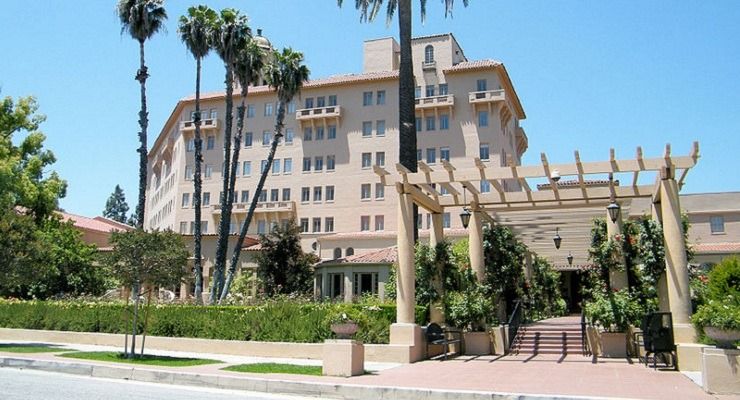
Oral argument is scheduled for March 3 at the Richard H. Chambers U.S. Court of Appeals courthouse on South Grand Avenue in Pasadena. A ruling is not expected before mid-March, according to the Los Angeles Times.
The injunction is a routine procedural step that allows the court to maintain the status quo while it reviews the case, not a ruling on whether the law is constitutional.
The panel stated in its order that the government had “made a sufficient showing to warrant a temporary administrative injunction pending completion of full briefing.”
The law, which Gov. Gavin Newsom signed on Sept. 20, was set to take effect Jan. 1, 2026, but California Attorney General Rob Bonta’s office agreed not to enforce it while the federal government’s legal challenge played out. A willful violation of SB 805 would be a misdemeanor. The law exempts undercover officers and also bans bounty hunters from conducting immigration enforcement in California.
Two laws, two rulings
SB 805 is one of two related California laws challenged by the U.S. Department of Justice.
The other, SB 627, the No Secret Police Act, bans law enforcement officers from wearing masks while on duty and was lead authored by Sen. Scott Wiener (D-San Francisco).
Sen. Sasha Renée Pérez is a joint author of SB 627, the No Secret Police Act, alongside lead author Wiener and Sen. Aisha Wahab, and she voted “aye” on the bill.
On Feb. 9, U.S. District Judge Christina A. Snyder issued separate rulings on the two laws. She blocked SB 627, finding it treated federal officers differently from state police. But she upheld SB 805, finding it applied equally to all law enforcement — federal, state and local.
Snyder found that SB 805 was akin to traffic regulations that govern how all officers operate in the state, according to her ruling. She also found there was no justification for officers to hide their identities during routine, non-exempt duties, according to the ruling reported by Politico.
Snyder stayed her ruling until Feb. 19 at the federal government’s request. When the stay expired, the DOJ appealed to the 9th Circuit, which issued the temporary injunction the same day.
Federal arguments
The federal government argues that SB 805 violates the Supremacy Clause of the U.S. Constitution by attempting to regulate federal law enforcement operations and imposing criminal penalties on federal officers for noncompliance, according to the DOJ’s complaint filed Nov. 17.
The government contends the law impedes officers’ ability to do their jobs and puts them at risk, according to court filings. Acting ICE Director Todd Lyons testified before a Senate committee that agents face genuine threats to their families.
“ICE agents don’t want to be masked,” Lyons said, according to the Washington Times. “They’re honorable men and women, but the threats against their family are real.”
California’s position
California argues that SB 805 applies equally to all law enforcement — federal, state and local — and therefore does not discriminate against the federal government, according to Bonta’s office.
“Transparency and accountability are the foundation of good law enforcement,” Bonta said in a Feb. 9 statement from his office. He said the Trump administration had “deployed masked and unidentified agents to carry out immigration enforcement, despite the risks these tactics pose to public safety and basic civil liberties,” according to the statement.
As of Sunday, it appears Pérez’s office had not issued a public statement responding specifically to the 9th Circuit’s Feb. 19 injunction.
What’s next
The 9th Circuit panel, which includes two judges nominated by President Trump and one by President Obama, will hear oral argument on March 3 at the Pasadena courthouse. Only one panelist has been publicly identified: Judge Mark Bennett, a Trump appointee from Hawaii, according to the Los Angeles Times.
Meanwhile, Wiener has introduced SB 1004 to replace the blocked mask ban with a version that includes state officers, addressing the Supremacy Clause flaw Snyder identified. More than a dozen other states are pursuing similar identification and mask laws, according to the Los Angeles Times.
“As the Trump Administration conducts its cruel and fascist war on immigrants, California won in court today,” Pérez said in her Feb. 9 statement from her office, referring to the district court ruling. Whether that victory holds will be tested March 3, one block from the Arroyo Seco.
 Get our daily Pasadena newspaper in your email box. Free.
Get all the latest Pasadena news, more than 10 fresh stories daily, 7 days a week at 7 a.m.