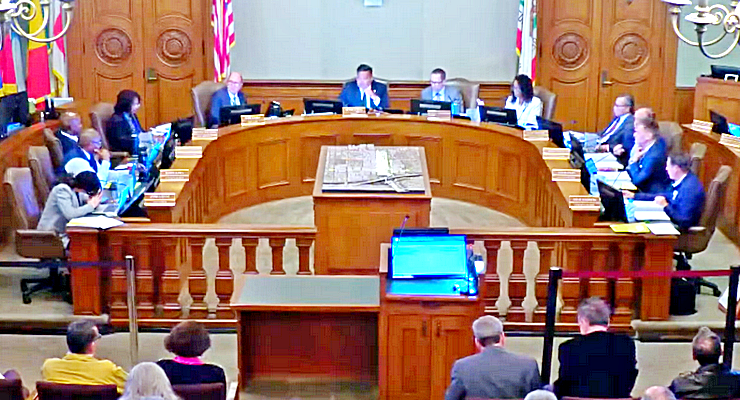








A confused Monday night vote and a public admission of error by Pasadena Mayor Victor Gordo punctuated a contentious City Council meeting Monday, as the Council moved to reopen a public hearing over a proposed safe parking program at All Saints Church that has sharply divided City leaders and residents.
After saying he would vote against the motion and even questioning the legality of bringing the item back to the City Council, Gordo voted yes on the item which would allow people to stay overnight in their cars at an All Saints Church Parking lot.
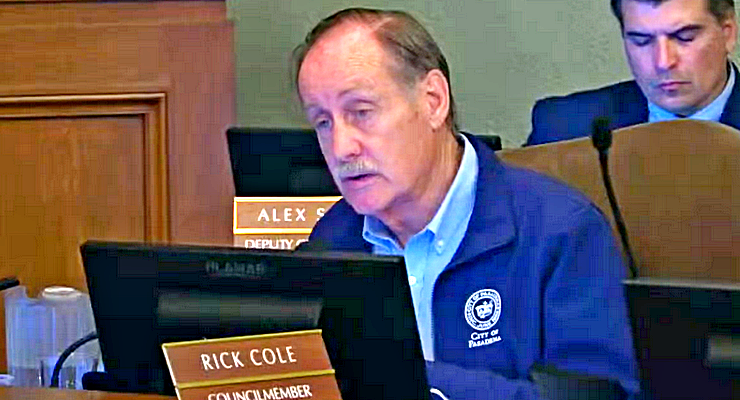
“Did I vote yes?,” Gordo asked after Councilmember Rick Cole thanked him for his support.
After Gordo was informed that he did vote in the affirmative, he said the question was a little confusing.
The record will reflect Gordo intended to vote against the notion.
Nevertheless, the item passed 6-1-1 with Gordo, Vice Mayor Jess Rivas and Councilmembers Rick Cole, Gene Masuda, Steve Madison and Jason Lyon voting in favor.
Tyron Hampton abstained and Justin Jones was the lone “official” no vote.
But Gordo probably wasn’t the only one left a little confused. The conversation was confusing and contentious.
Gordo was accused of seeking legal advice after he asked questions about the legality of bringing the matter back.
That turned into accusations by Gordo and Madison that each one revealed information that was discussed in closed session.
Someplace in the middle were questions regarding the role of Roberts Rules of Order in City Council meetings.
The proposal stalled in November after the Council failed to secure the five votes required to approve a California Environmental Quality Act exemption. Under City rules, the failure to act constituted a “deemed denial,” effectively halting the project without a substantive ruling on its merits.
But when that meeting was held Madison was on an airplane with no internet heading back into California.
The District 6 Councilmember later requested the issue come back. On Monday he argued the matter should be reheard by a full Council in a quasi-judicial proceeding.
“I’m simply asking that we reopen the public hearing, have a full Council hear the matter on the merits,” Madison said. “It may succeed, it may fail, it may result in some other outcome, but it’ll be a process that we can all be proud of.”
The motion immediately exposed divisions among Councilmembers over procedure, precedent and legal risk.
“The Council was faced with a tough procedural dilemma, with one party threatening to sue the City if the hearing was reopened, and another threatening to sue if it wasn’t,” said Councilmember Jason Lyon. “In the end, because All Saints never received a vote on the merits of its application, and the matter was ‘deemed denied’ because, with one absence, we didn’t have five votes to make a routine environmental finding, the majority of the Council decided tonight to reopen the public hearing, clean up the non-decision of the previous hearing, and take an up-or-down vote on the merits. I think it was the right call, both on the law and in terms of plain fairness.”
In correspondence to the City Council Silvio Nardoni, board secretary for the Maryland Homeowners Association said the item could not legally come back before the City Council.
“Because the denial became final, no further action can be taken on it,” Nardoni wrote.
The group has opposed the safe parking proposal since appealing the initial approval by a City hearing officer in June, and subsequently appealing the Board of Zoning Appeals’ affirmation in September.
Councilmembers said they would once again listen with an open mind when the item comes back to the City Council.
“When we hear this hearing again, I will hear it with an open mind to all aspects,” said Tyron Hampton, “and I will listen to the testimony again as if I’d never heard it before.”
Hampton abstained on Monday.
“Between the eight of us, including Madison online, we have 89 years serving as a member of this body,” said Cole. “And over the course of that nearly nine decades of experience, each of us has had to make hard decisions both politically and personally hard decisions, but also just difficult to know what the right path is. But there’s a fundamental difference between a quasi-judicial hearing and what we think we personally would like the outcome to be. We are obligated to listen objectively and I look forward to doing that.”
 Get our daily Pasadena newspaper in your email box. Free.
Get all the latest Pasadena news, more than 10 fresh stories daily, 7 days a week at 7 a.m.