

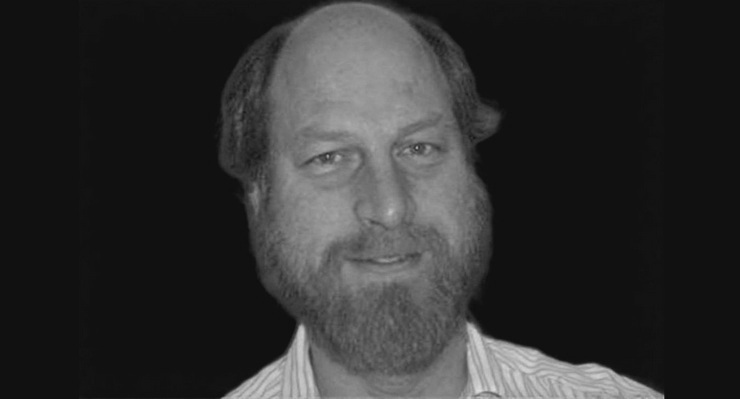
The Los Angeles County Board of Supervisors on Tuesday adjourned its meeting in honor of Carl Grillmair, a Caltech astronomer who spent nearly three decades at the institute’s Pasadena-based IPAC — Infrared Processing and Analysis Center — and was fatally shot last month at his Antelope Valley home. He was 67.
Fifth District Supervisor Kathryn Barger, who represents Pasadena, moved the March 3 adjournment in memory of Grillmair, whose research helped detect water in the atmosphere of a planet outside our solar system and who discovered dozens of previously unknown stellar streams in the Milky Way, according to Caltech.
“Dr. Carl Grillmair was a brilliant scientist and a proud member of our Antelope Valley community,” Barger said in a statement. “His life’s work expanded humanity’s understanding of the universe. Today, we pause to honor his extraordinary legacy and to extend our deepest condolences to his wife and all who loved him.”
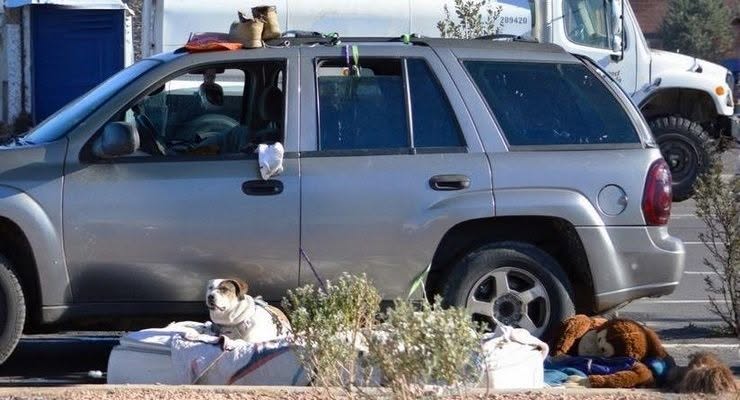
Grillmair was found with a gunshot wound to the torso on the front porch of his home in the 30700 block of 165th Street East in Llano, an unincorporated community in the Antelope Valley, after deputies responded to a 911 call around 6:10 a.m. on Feb. 16, according to the Los Angeles County Sheriff’s Department. The Los Angeles County Medical Examiner ruled his death a homicide.
Freddy Snyder, 29, has been charged with murder, carjacking, and burglary in connection with the killing, along with an allegation of personal and intentional discharge of a firearm causing great bodily injury, according to the Sheriff’s Department. Snyder is being held in lieu of $3.175 million bail and is scheduled to be arraigned March 26 in Lancaster, according to authorities. No motive has been publicly disclosed.
A native of Calgary, Alberta, Canada, Grillmair joined IPAC in 1997 and over nearly 30 years published 147 peer-reviewed papers. His research focused on dark matter, galactic structure, stellar populations, and the detection of exoplanets, according to the Barger statement. In 2007, he was lead author on a study that for the first time captured enough light from planets outside our solar system to identify molecules in their atmospheres, according to a Caltech memorial.
He also worked on NASA’s Hubble and Spitzer Space Telescopes and served as a quality assurance scientist and pipeline operator on the NEOWISE mission, which used a space telescope to detect asteroids and comets, according to Caltech. In 2011, NASA awarded him the Exceptional Scientific Achievement Medal.
“He was part of IPAC’s bedrock for many years, and his passing impacts all of us across IPAC,” Tom Greene, IPAC’s executive director and a research professor of astronomy, said in a Caltech statement.
Colleague Sergio Fajardo-Acosta, an astronomer at IPAC who worked alongside Grillmair for 26 years, called him irreplaceable. “What was unique about Carl — and he is irreplaceable — was the ingenuity and the creativity, applying methods that nobody had ever thought of before … and very unique detective-type methods,” Fajardo-Acosta told ABC7.
Grillmair earned a bachelor’s degree in astrophysics from the University of Calgary, a master’s in astronomy from the University of Victoria, and a doctorate in astronomy and astrophysics from Australian National University before building his career at Caltech’s Pasadena campus, according to the Caltech memorial.
Outside the lab, Grillmair was an avid pilot who flew small aircraft and gliders he owned and maintained at his desert home, where he also kept a personal observatory with several telescopes, according to Caltech. He was also a cyclist, alpine hiker, and helicopter skier, according to the Barger statement. At the time of his death, he was working on a project to test new instrumentation at Caltech’s Palomar Observatory to monitor for meteor impacts on the Moon’s surface during a lunar eclipse, according to Caltech.
Fajardo-Acosta has dedicated IPAC’s weekly science talk series, “The Next Seven Minutes,” to Grillmair’s memory, according to the Caltech memorial.
Grillmair is survived by his wife, Louise.
Anyone with information about the shooting is asked to call the Sheriff’s Homicide Bureau at 323-890-5500. Anonymous tips can be submitted through L.A. Regional Crime Stoppers at 800-222-8477 or lacrimestoppers.org.
The investigation remains ongoing, according to the Sheriff’s Department.
 Get our daily Pasadena newspaper in your email box. Free.
Get all the latest Pasadena news, more than 10 fresh stories daily, 7 days a week at 7 a.m.