










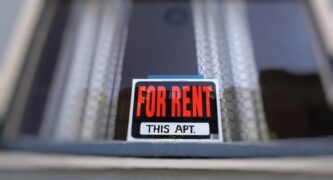


After five months of landlord protests and mounting concerns over a data breach involving the city’s rental registry vendor, the Pasadena Rental Housing Board on Thursday voted unanimously to scrap a blanket requirement that landlords upload copies of every rent increase notice — roughly 25,000 documents a year containing tenant names — and instead require redacted notices only in the approximately 600 cases annually where staff flag a potential violation.
The 8-0 vote, taken during the board’s regular meeting, amends Chapter 9 of the Pasadena Rental Housing Board’s rental registration regulations and ends a policy dispute that had returned to the dais on March 19 and April 2 before Thursday’s vote.
Under the new rule, referred to during deliberations as “Option 3” and originally proposed by Board Member Emanuel Najera at the March 19, 2026 meeting, the Rent Stabilization Department (RSD) will require a redacted copy of a rent increase notice only when data submitted through the department’s registry system indicates either a potentially excessive rent increase or a rent increase issued before 12 months have elapsed since the previous increase. In all other cases, landlords will continue to report rent increases through the existing registry process, attesting under penalty of perjury that the reported figures are accurate.
“If we just take the word upload out of this, because that’s the trigger for the potential data breach,” Board Member Ryan Bell said during deliberations, “the department would be within its rights to call the landlord and say, ‘Could you please bring us or email us a copy of the rent increase notice so we can compare, please redact the tenant’s name?'”
Bell, who had authored a competing proposal known as “Option 4” at the board’s April 2, 2026, meeting — a plan to replace the upload requirement with annual mailings informing tenants of the rent amounts reported by their landlords — withdrew that approach on Thursday, April 16, 2026, after Morales confirmed the department already has administrative authority to send informational mailings to tenants and landlords at its discretion, without a separate board motion.
Bell said during deliberations that the staff report had mischaracterized his Option 4 as a combination of the upload requirement and the mailing. “What I’m proposing is that landlords not upload rent increased notices,” Bell said, adding that the mailing was intended as an administrative alternative to uploads, not as an addition to them. Wernberg echoed the point, saying she had watched the April 2, 2026 meeting and “did not hear any mention of it being combined with uploading as well.”
The final motion, moved by Bell and seconded by Board Member Emily Wernberg, amends Chapter 9 in keeping with the Option 3 language on page two of the staff report and finds the action exempt from the California Environmental Quality Act (CEQA).
Privacy concerns anchored in Berkeley breach
The debate has been shaped throughout by a data breach at 3Di, the vendor that operates the rental registry system used by Pasadena and Los Angeles County.
“3Di had that Berkeley data breach and we have no idea what data has been scraped, what data’s available, what data is being sold on the black market,” Wernberg said. “As a reminder, it had preferred language available. It had Section 8 housing status available. It had the names of all the tenants living at that address available. I feel like it’s a can of worms we do not want to open.”
Wernberg said the average data breach lawsuit starts at between $600,000 and $2 million on the low end, a level of liability she said the board should not incur. She argued that the registry’s existing sworn-attestation feature — a checkbox landlords click under penalty of perjury when submitting rent data — already gives the department a legal basis to pursue violations without collecting tenant names preemptively.
“The only way to guarantee the safety and security of tenant data is by not collecting it in the first place,” Wernberg said. She credited Najera with first proposing Option 3 at the March 19, 2026 meeting, saying “Manny came up with option three, which I think is the best option.”
Najera said privacy had been a primary concern throughout the months-long debate. “Privacy is one of my main things,” Najera said, adding that landlords should be able to “send a notice without the tenant’s information” attached. Najera later suggested that RSD Executive Director Helen Morales identify the owners of the roughly 600 flagged properties and, where a landlord shows “a history of overcharging rent increases,” send tenant-notification letters to every unit that landlord owns in the city.
Board Members David Coher, Varouge Mesrobian and Deborah Dunlop also said they shared the privacy concerns. Dunlop said she remained “really against the uploading of these notices” but could support Option 3 because it limited any upload to roughly 600 flagged cases rather than all 25,000 annual rent increase notices.
Landlord pushback and the staff position
RSD Executive Director Helen Morales, presenting the item, told the board the department was seeking authorization of Option 4 — letters to tenants informing them of rent amounts reported by their landlords — saying “the review of notices of rent increases is essential to ensure compliance with the charter’s mandate to regulate excessive rent increases.”
Morales noted that the board adopted Chapter 9 rental registration on June 26, 2024, and amended it on February 27, 2025, to establish a definition of transient occupancy displaced by the Eaton Fire, and on August 7, 2025, to establish late fees for rental registration not in substantial compliance. The current proposal, she said, would have aligned the regulation with the charter’s mandate to regulate excessive rent increases and prevent arbitrary evictions.
She estimated that a mailing to all tenants would take approximately 80 staff hours and cost about $10,000 in postage — substantially less, she said, than what the department spent on the earlier Eaton Fire-related mailing, which used a contractor to expedite delivery.
Morales also told the board that the original requirement to upload rent increase notices had been baked in as a default when the 3Di registry system was first configured. Staff, she said, “had to go back a couple of years to find out how this happened” once landlords began questioning where the obligation was written down.
Public speakers opposed the staff recommendation. Alan Bear called the idea of reviewing 25,000 rent increase notices a year “nonsensical” and a waste of time, saying “anyone can fabricate a rent increase notice if that’s their intention.” He suggested the department instead sample 5% of tenants each year to verify compliance.
Adam Bray-Ali, a landlord who said he also operates in Los Angeles County, told the board the 3Di system used by the county “does not require” uploads of rent increase notices and said the RSD director “has been called out on it over the course of five months, and the story keeps changing.”
Wernberg told the board that at the March 19, 2026, meeting Morales had reported approximately 600 cases a year in which questions arise about rent increases — about 2.4% of the roughly 25,000 rent increases registered annually. “From a business standpoint, it seems like a huge commitment of resources to take care of 2.4% of issues that we’re running into,” Wernberg said.
What ‘redacted’ means
After the motion was placed back on the table, board members sought clarity on what landlords would be required to produce in the 600 or so flagged cases.
Morales said the department does not want tenant names included. “Whatever method you use to remove something to take it off, we don’t want the tenant name,” Morales said.
The redacted notice, Morales said, would retain the address, the date it was served, the time period it covers and the amount of the rent increase — information the department needs to substantiate whether a reported increase is accurate.
Board Member Mesrobian said the approach amounts to “getting a paper trail on top of them self-attesting that they did the right thing.” Mesrobian also floated a tenant-consent mechanism, asking whether landlords could be required to obtain written confirmation from the tenant that the reported rent increase was accurate before any upload. Morales responded that such a requirement would be “a lot of work” and that the tenant “may not consent.”
Near the close of the item, Morales offered a further compromise: the department could send notification letters to the tenants of just the 600 or so flagged properties each year, rather than to all 25,000 units, informing them of the rent amount reported by their landlord and advising them of their right to petition a hearing officer. Bell said that approach was acceptable to him.
Roll call
Voting in favor of the motion were Chair Allison Henry, Vice Chair Christine Rodriguez and Board Members Bell, Coher, Dunlop, Mesrobian, Najera and Wernberg. Alternate Board Member Peter Dreier was absent. Rodriguez, who was elected vice chair by unanimous vote earlier in the same meeting, cast her first vote in that role on the Chapter 9 motion.
“My main objective here is that we never have to talk about this again,” Bell said. “So whatever is required to get that done, I’m partly joking. I think we need to resolve this.”
Chair Henry, closing the item, said, “I think we’re all just glad to move on from that.”
 Get our daily Pasadena newspaper in your email box. Free.
Get all the latest Pasadena news, more than 10 fresh stories daily, 7 days a week at 7 a.m.