







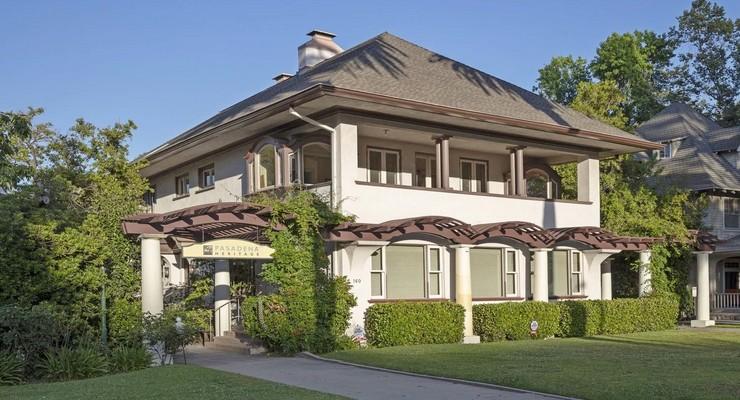
That gap — between the buildings this city values and the hands that can actually maintain them — is what Dr. Bridget Lawlor calls the quiet crisis beneath every other preservation fight.
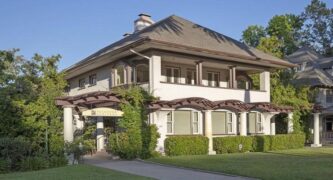
The Craftsman bungalows, the Greene & Greene landmarks, the Prairie School estates, the period tile and original millwork of Pasadena’s historic districts: all of them were built by hand, and all of them can only be maintained by hand. But the artisans who possess those skills are aging out of the workforce faster than they are being replaced.
“These skilled trades are what make preservation possible,” Lawlor said in an interview with Pasadena Now. “The knowledge required to restore historic windows, repair plaster, work with wood, or just maintaining traditional building materials is becoming increasingly rare.”
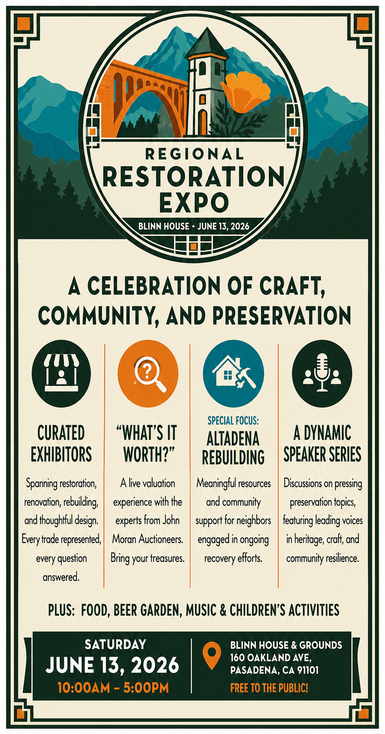 Lawlor, who became executive director of Pasadena Heritage on December 1, has made that problem the centerpiece of her first major public event. Saturday’s Regional Restoration Expo brings roughly 40 to 50 curated restoration specialists, artisans, heritage material suppliers, and preservation service providers together at the historic Blinn House — all under one roof, all in one day, all free to the public.
The event is co-hosted by four organizations: Pasadena Heritage, the Glendale Historical Society, Altadena Heritage, and the Altadena Historical Society. When Glendale reached out about a regional collaboration, Lawlor said, “we thought, what a great idea — working across city boundaries, expanding our messaging, but also expanding resources.”
The numbers frame the urgency. The U.S. construction industry needs 349,000 new workers in 2026 alone, according to the Associated Builders and Contractors. More than one in five tradespeople nationally are over 55, according to industry data. By 2030, an estimated 2.1 million skilled trades positions could go unfilled, according to research published by global commercial real estate services company Jones Lang LaSalle Incorporated April 2026. None of those figures are specific to preservation trades — no reliable count of historic plaster specialists or period-window restorers exists — but the broader workforce trend is stark.
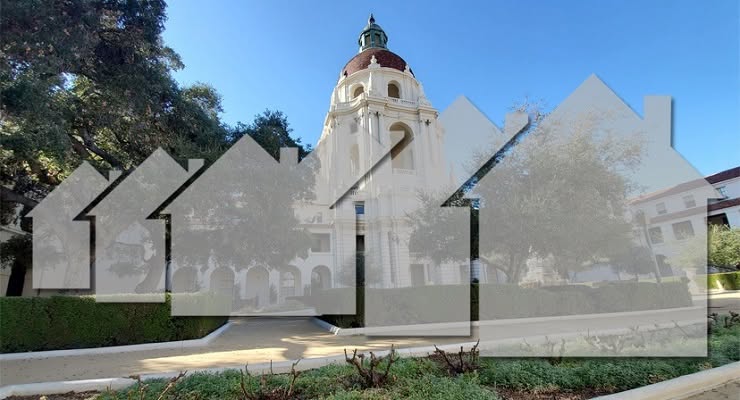
In Pasadena, where the city has designated more than 100 local landmarks and numerous landmark districts across its 23 square miles, the practical consequences are felt house by house. A homeowner who needs a window sash rebuilt to match 1910 millwork is not looking for a general contractor. They need someone who understands the joinery, the wood species, the proportions. Those practitioners are not easy to find.
“For homeowners of these properties, venturing into preservation by bringing back historical details can not only give a sense of pride but also a financial reward when the day comes to sell the property,” said Michael Robleto, board chair of Pasadena Heritage and a realtor specializing in historic properties, in written responses to Pasadena Now. “Pre-war neighborhoods are synonymous with the identity of Pasadena, and the demand for these properties is constant.”
Lawlor said she is developing a new initiative called “Our Place,” designed to connect young people with architecture, preservation, design, and skilled trades through hands-on learning and mentorship. The program is still seeking funding and has not yet launched.
“At a time when a lot of communities are facing shortages in skilled crafts and construction-related professions, we see preservation as a powerful way to introduce young people to meaningful career pathways,” Lawlor said.
The expo’s speaker series reflects the range of preservation challenges facing the region.
Adrian Scott Fine, president and CEO of the Los Angeles Conservancy, opens at 10 a.m. with a talk on preservation in a changing world. The afternoon includes sessions on fire-defensive landscaping, Altadena’s history, the rebuilding of Janes Village, and the relocation of historic homes to fire-affected lots in Altadena.
Fine, in written responses to Pasadena Now, said the most impactful thing residents can do is “start by strengthening the preservation organizations that are already in your corner, so they’re ready to help when it counts.”
“When you become a member, donate, or volunteer, you’re building the local capacity for preservation,” Fine said. “This is your go-to group to ask questions, look for resources and help, and point you in the right direction.”
The January 2025 Eaton Fire, which devastated Altadena and destroyed thousands of structures including historic Janes Village and the Andrew McNally House, added urgency to the trades question. Rebuilding with period-appropriate materials and techniques requires exactly the workforce that is shrinking.
“The wildfires fundamentally changed the conversation,” Lawlor said. “Preservation is no longer just about protecting historic buildings. It’s also about community recovery and resilience and identity.”
The expo runs Saturday, June 13, from 10 a.m. to 5 p.m. at the historic Blinn House, 160 N. Oakland Ave. in Pasadena. Admission is free and no registration is required. Tickets for the “What’s It Worth?” live valuations by John Moran Auctioneers are $35. For information, visit pasadenaheritage.org or call (626) 441-6333.
 Get our daily Pasadena newspaper in your email box. Free.
Get all the latest Pasadena news, more than 10 fresh stories daily, 7 days a week at 7 a.m.