








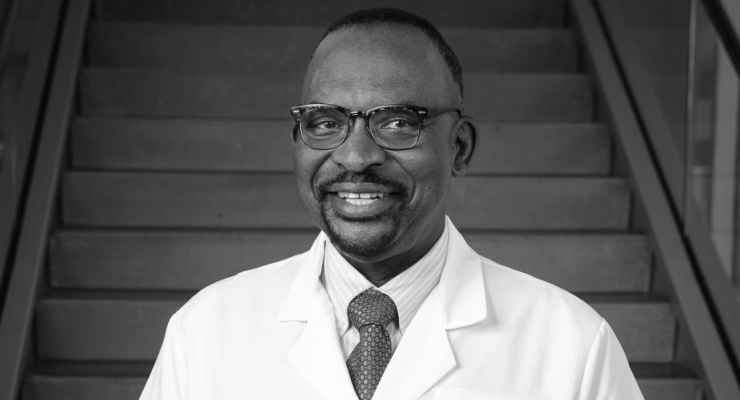
Fonteh, a research professor who led the Biomarker and Neuro-disease Mechanism Laboratory at Huntington Medical Research Institutes in Pasadena, has died, the institute said in a memorial notice. HMRI described his passing as unexpected and did not state a date of death.
For much of his career at the Fair Oaks Avenue institute, Fonteh worked in lipidomics, developing methods to characterize lipid classes in cerebrospinal fluid, plasma and urine. His aim, according to HMRI, was to find disease-specific changes that could support earlier diagnosis, prevention and potential therapies — catching the disease in its presymptomatic stage, before memory begins to fail.
Fonteh’s work reflected a conviction, the institute said, that shifts in lipid metabolism are not merely structural features of the brain but may point to disease mechanisms and therapeutic targets.
His work drew in specialists across fields, from clinical neurology and cardiology to synthetic chemistry and biostatistics. HMRI said he collaborated with colleagues at Caltech, the Mayo Clinic, Stanford, the University of Texas Health Science Center at San Antonio and the University of Southern California.
HMRI said that Fonteh’s service reached beyond the laboratory. The institute said he sat on the faculty council of the African Initiative on Bioinformatics Training in Neurodegenerative Diseases and served on an external advisory board for the BUILD-FSA project, a dementia-research effort focused on French-speaking Africa, mentoring students along the way. His editorial and peer-review roles included the journals Molecular Neurodegeneration, Frontiers in Physiology and Disease Biomarkers, National Institutes of Health study sections and Department of Defense research programs.
The origin of that work was personal. In a 2015 interview, according to HMRI, Fonteh described watching his grandmother lose her recognition and bearings in his home village, before the disease could be readily diagnosed there.
More recently, he presented a lecture titled “The Involvement of Lipids in Alzheimer’s Disease Pathology and Potential Therapies,” exploring how brain-derived lipids might serve as early, non-invasive signals of disease risk.
Colleagues remembered Fonteh for a steady, generous presence, according to the institute. HMRI said he was known for kindness and warmth, gave freely of his time, and fostered collaborative, translational research aimed at connecting laboratory discovery with patient care. Much of that legacy, the institute said, lives on in the scientists he mentored.
 Get our daily Pasadena newspaper in your email box. Free.
Get all the latest Pasadena news, more than 10 fresh stories daily, 7 days a week at 7 a.m.