




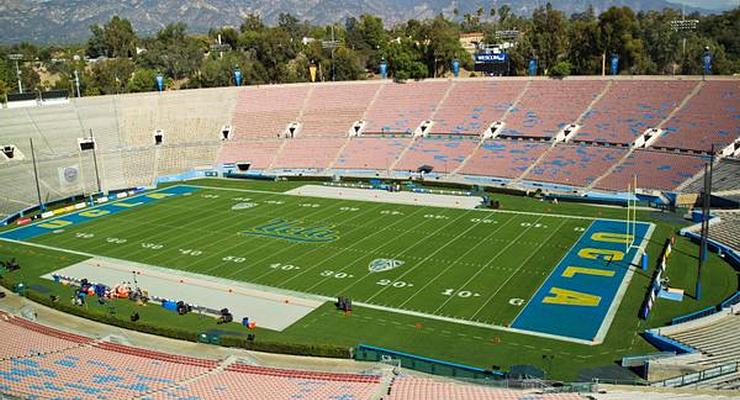
[UPDATED] Although UCLA has filed a motion to take a lawsuit filed by the City against the university to arbitration, a clause in the lease with the Rose Bowl could work in the City’s favor.
A high-stakes dispute-resolution that allows a judge to pick a neutral third party during the dispute process does not automatically apply when either party seeks to terminate the agreement or when UCLA claims a “Game Threatening Default.”
A game threatening default is defined as a condition that could prevent the Bruins from playing a scheduled home game at the Rose Bowl.
In a situation where either party seeks to end the agreement, the sides can only go to a neutral third party if all sides agree in writing, according to Paragraph 31, Section C of the rental agreement.
UCLA has filed a motion to compel the two sides to enter arbitration.
The City has not agreed to enter into the dispute resolution procedure.
Paragraph 31 is part of the broader contract that Pasadena and the RBOC argue UCLA is allegedly attempting to abandon as the university pursues a move to SoFi Stadium.
“The Agreement, entered into by 2 well represented and sophisticated organizations, clearly states that the Dispute Resolution process is: “Not applicable to Termination or Game Day Threatening Default,”’ said Mayor Victor Gordo. “The Rose Bowl Stadium is the very heart and soul of the City of Pasadena, not to mention a very important component of our local and visitor economy, and OUR heart and soul is not for sale.
“That is precisely why the Agreement makes crystal clear that ‘monetary damages’ are insufficient. Pasadena loves its Bruin football and we will continue to look forward to the blue and gold taking the Rose Bowl Field. Go Bruins!!”
The Bruins currently pay no rent to play in the Rose Bowl, and receives no part of money the stadium makes from the expensive suites.
The college would supposedly get a piece of the suite money in a deal with SoFi. SoFi is closer to the college than the Rose Bowl.
Fans reaction to the potential move has been mixed.
Officials at the college claim they have made no efforts to terminate the lease although the City says in its lawsuit that officials at the college have said multiple times they do not plan to return.
If a judge rules the college is not attempting to terminate the lease, then dispute process could come into play.
Under that process, disagreements over whether either side has violated the terms of the deal—or whether a violation has been fixed—must be submitted to a neutral third party for resolution.
The neutral party is selected from a list of three candidates provided by the presiding judge of the Los Angeles County Superior Court’s Northeast District.
Each side may strike one name, and the remaining candidate decides the issue.
The selected neutral party has broad authority to set the rules, procedures and methods for resolving the dispute.
Both sides must cooperate in good faith and provide information as needed. Unless both parties agree to extend the deadline, the entire process must conclude within 30 days of its initiation.
 Get our daily Pasadena newspaper in your email box. Free.
Get all the latest Pasadena news, more than 10 fresh stories daily, 7 days a week at 7 a.m.